

Featured Faculty
Featured Faculty
Dr. Sarah Hart Micke
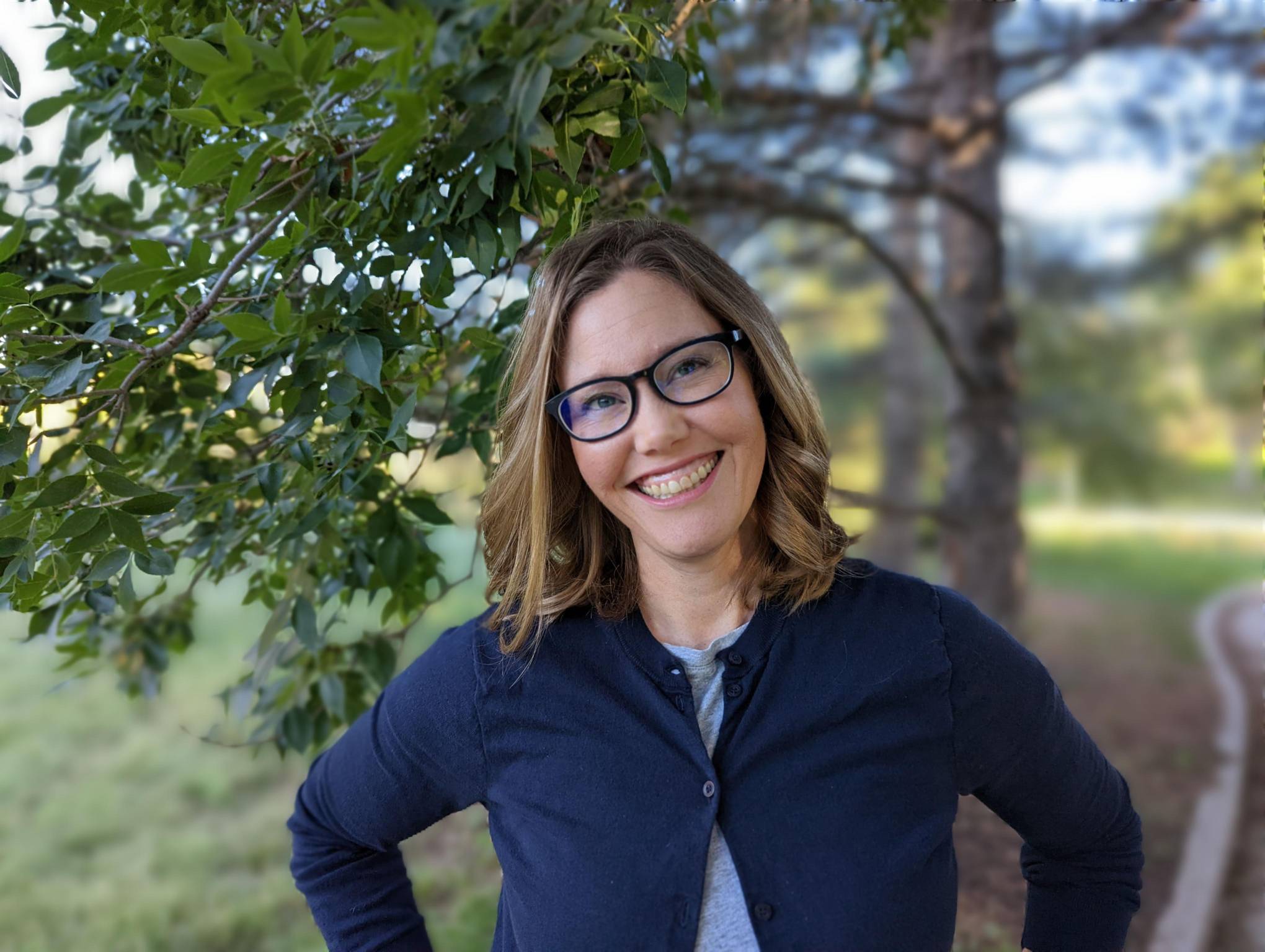
A new member of the MARC faculty, Dr. Hart Micke, joins as an assistant professor and director of the University Writing Center (UWC). With over 15 years of experience teaching college-level writing, Dr. Hart Micke’s enduring interests in how language sustains ethical communities in and beyond academia brings her to Texas State’s MARC program and writing center.
Born and raised in Abilene, Texas, Dr. Hart Micke earned her BA at Southwestern University in Georgetown, TX. Inspired by her second-grade teacher, Dr. Hart Micke had always wanted to empower students and understand what sparks curiosity and creativity in learning. Although she began as an early childhood education major, she switched to English, in part because an English degree offered flexibility to take fascinating electives in so many disciplines, from psychology to philosophy and anthropology. After graduating, Dr. Hart Micke briefly worked for a Texas state senator, which deepened her interests in how language shapes the exchange of knowledge in civic as well as academic contexts.
When earning her MA and PhD at Texas A&M University, Dr. Hart Micke focused on intersections between rhetoric and literature. Her early publications in venues such as Rhetoric Review explore how often-anthologized elegiac poems may rhetorically mitigate experiences of loss and grief for mournful readers, in part by connecting them indirectly with others familiar with loss.
“Rhetoric was a really good fit for me because it fit my interest in connecting theory and practice,” said Dr. Hart Micke.
Over the last decade, the synergy between Dr. Hart Micke’s research and teaching at public and private universities in Colorado has shaped her focus on community-engaged pedagogy. To share her value of empowering young learners with undergraduate students, Dr. Hart Micke collaborated with four K-12 schools through curricular and co-curricular programs. For example, for nine years, she partnered her first-year writing classes with a local elementary school, where her students would mentor first- and second-graders. Dr. Hart Micke prioritizes students’ experiential learning, through which, in her words, “writing becomes an avenue for deepening the value that [students’] actions and experiences have.” Her publications on community-engaged pedagogy appear in journals such as Reflections: A Journal of Community-engaged Writing and Rhetoric and Rhetoric Society Quarterly.
These community partnerships complement Dr. Hart Micke’s abiding interest in writing center work. As an undergraduate, Dr. Hart Micke frequented the writing center first as a writer and then as a consultant supporting other writers. She also served as Writing Center Assistant Director for three years at the University of Denver. These experiences shaped her pedagogical values of dialogue, collaboration, and, in her words, “the sense that writing is a profoundly communicative act.” Dr. Hart Micke said one of her favorite things about writing center work is learning more about how writers effectively connect with others in different contexts. Here at Texas State, Dr. Hart Micke carries forward the University Writing Center’s rich traditions of being a “vibrant place for dialogue,” Dr. Hart Micke said, and of ensuring that all writers from different disciplines and backgrounds feel supported: According to Dr. Hart Micke, “It’s an ongoing commitment we live out every day.”
Through these partnerships, Dr. Hart Micke refined her focus on rhetorical listening as a key concept and strategy for collaborating in and beyond writing classrooms. For example, her Rhetoric Society Quarterly article applies theories of the debrief genre—a process originating in military or emergency response settings through which all contributors participate in a post-event discussion that triangulates everyone’s perspective—to community-engaged writing work. Such discussion strategies also ground Dr. Hart Micke’s forthcoming book chapter for the edited collection Teaching and Learning with Rhetorical Listening. Using theories of rhetorical and community listening, Dr. Hart Micke and her former colleagues facilitated professional development workshops for high school teachers, prioritizing strategies that foster community-building discussions.
Dr. Hart Micke is currently adapting such discussion and listening strategies in her transition to the writing center director role here at Texas State. For example, she applied a series of conversation prompts in a strategic planning session to help the writing center leadership team collaboratively develop a vision for leading the writing center forward. She is also designing a series of interview strategies to develop her process of listening her way into this leadership role. As other writing center assistant and associate directors move into and out of their roles at Texas State, Dr. Hart Micke is committed to “preserving some of that institutional history,” she says, to bring the “group together around a shared, collective purpose.”
These current projects form the basis of some of her works in progress about facilitating listening and dialogue in writing center contexts. Dr. Hart Micke especially values opportunities to connect with MARC students through her community- and writing-center-focused work. For example, she is collaborating with current and former writing center consultants on upcoming publications. Her goal in developing MARC graduate courses is to connect her values of rhetoric, dialogue, and listening with MARC students’ intellectual passions and professional trajectories. “To help students for the sake of improving their lives” motivates her to teach, said Dr. Hart Micke.
Off campus, Dr. Hart Micke enjoys spending time with her family, often exploring outdoors, crafting, baking, or reading with her young daughters.
As she settles into life at Texas State, Dr. Hart Micke is especially grateful to be part of the MARC community that prioritizes student support and connections with faculty. Whether in the classroom, writing center, or community, Dr. Hart Micke wants to help all of her collaborators feel that writing is an achievable way to express their voices and advocate for their values.